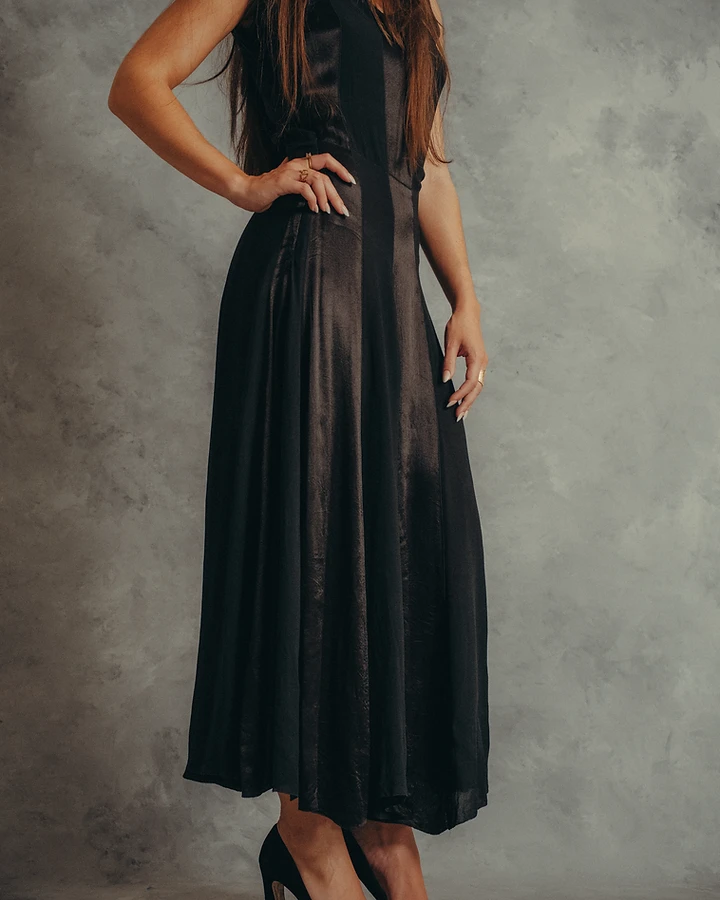
BC-1930-001
Giulietta Gown
c. 1932 · Archive
One of a kind — unavailable once acquired
A 1932 silk and silk chiffon gown defined by its striped pattern, fluid drape, and dramatic length. Balancing a fitted waist with a softly flowing silhouette, the gown carries a theatrical quality reminiscent of another era — romantic, a little eccentric, and entirely its own. Carefully reworked by hand, with refined sleeves, a discreet invisible zipper, and a more defined waist, the original movement of the gown remains at its heart. A rare study in vintage elegance and quiet spectacle.
Held in the archive
Provenance & Specification
- Era / Date
- c. 1932
- Materials
- Silk & Silk Chiffon
- Alterations / Restoration
- Extensively reworked by hand to refine the original fit and finish. The sleeves were reduced and reshaped through hand stitching, the waist was taken in to create a more defined silhouette, and an invisible zipper was added. Previously poor interior alterations were addressed during the restoration. Care was taken to preserve the gown's original drape and movement.
The Tale
Giulietta. Named in reference to Beethoven's "Immortal Beloved", Giulietta is a gown caught somewhere between romance and spectacle. Dating to 1932, its striped silk and silk chiffon brought to mind the unexpected image of a circus tent — theatrical, whimsical, and strangely beautiful. It was this unusual quality that drew Bella Cinquini to the piece: a gown that felt less like a conventional evening dress and more like a character of its own. The interior had been altered poorly before its acquisition. Through extensive hand stitching, the sleeves were reshaped, an invisible zipper was introduced, and the waist was refined to create a closer fit without sacrificing the gown's natural flow. The work was approached with an emphasis on preserving its original character while allowing it to be worn anew. Giulietta is a conversation between preservation and reinvention, where the romance of the past meets the hand of the present.